

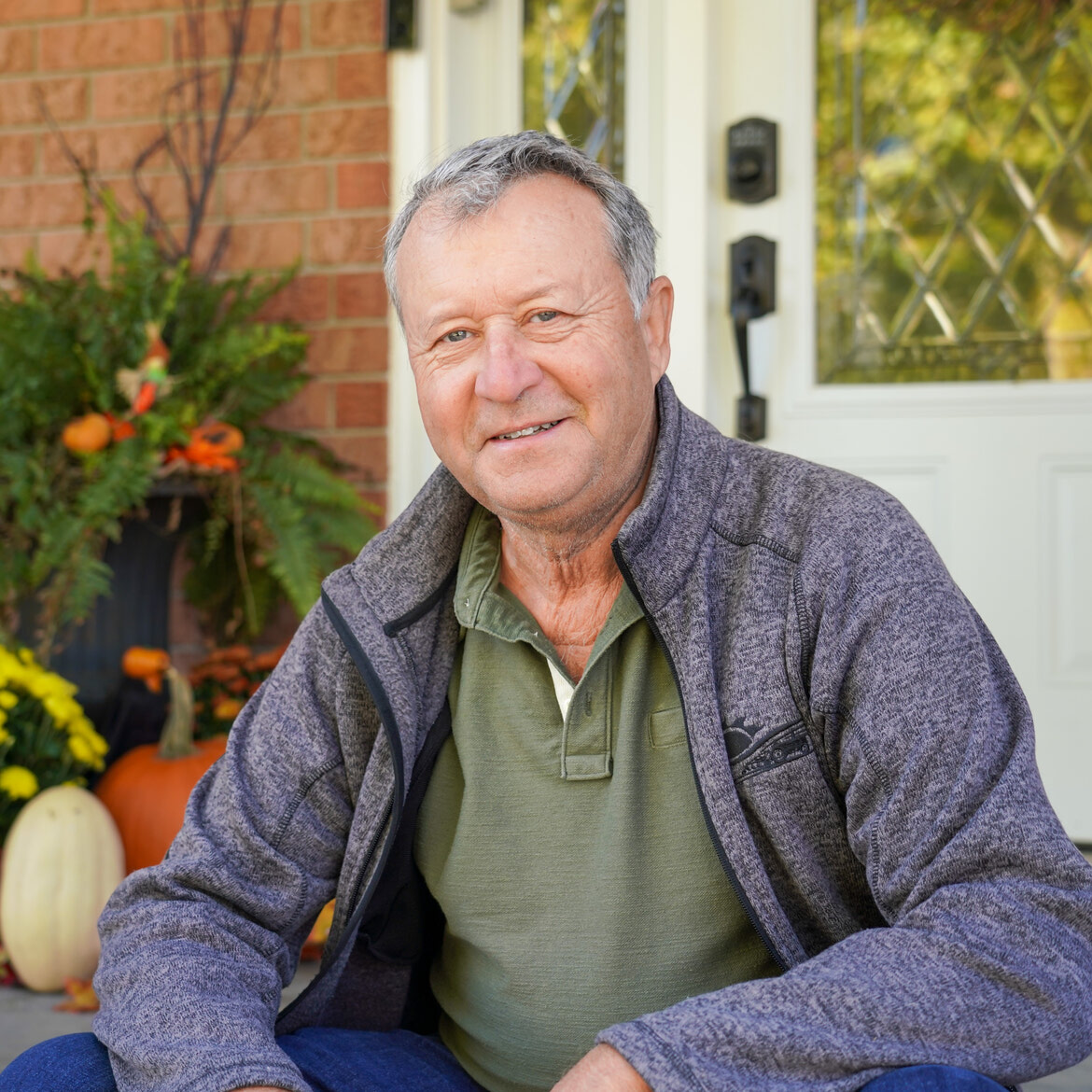
A fruitful next chapter for Jim Ginn
By Cory Bilyea
Municipal elections have now come and gone, and Jim Ginn, mayor of the Municipality of Central Huron, has stepped away from politics after four terms.
He is not retiring, however. There are new prospects on the horizon for this Clinton-area farmer: Ginn Creek Estate Winery.
“I still enjoy the job, and if it wasn’t for succession planning on the farm, I probably would have run again,” said Ginn during an interview with The Rural Voice.
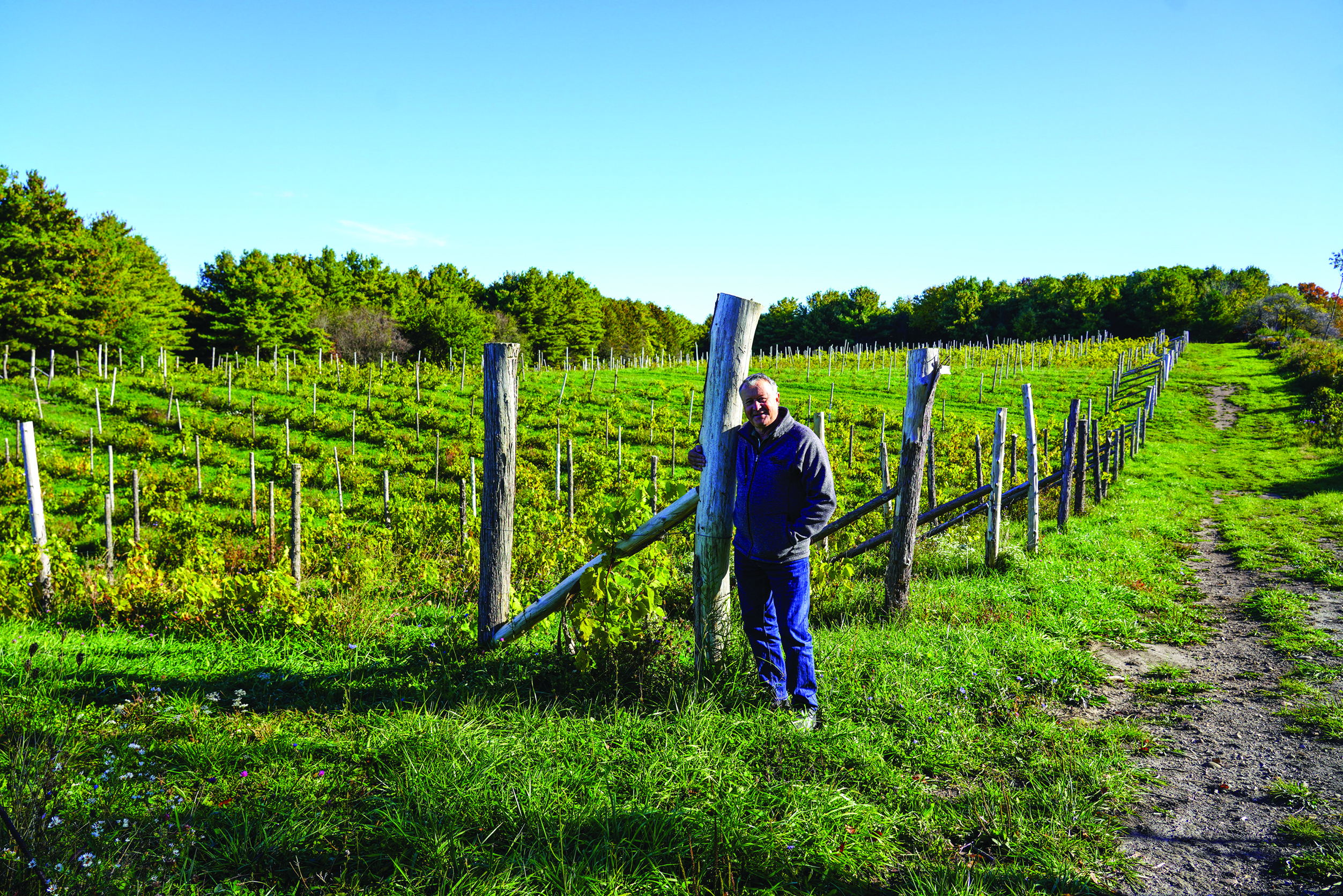
Farming has long been part of Ginn’s life. After he and his wife, Brenda, stopped raising beef cattle two years ago, he began considering what might come next for the 315-acre farm. Along Highway 8 between Clinton and Goderich, the farm’s steep, rolling hills weren’t well-suited to cropping, and his daughter, Kaylie, had long imagined a winery there.
“She said that if I wanted to plant vines and start a winery, she would come home and run it,” says Jim. After considering the timing, as he and Brenda were beginning their succession planning, they decided to take her up on the offer.
The vines were planted in 2025, and Kaylie, along with her husband Justin and their five-year old son are preparing to come home. Jim and Brenda have severed a section of their property for a winery that will also include a tasting room, storage space, and an upstairs apartment for Kaylie’s family to live.
Justin is taking horticulture courses at the University of Guelph and is close to earning his Master Gardener certification. Ginn expects him to take on much of the vine care, including pruning, as the family learns what the vineyard will require.
“When we decided we’re going to pursue the winery, I figured then that would be the end of the politics side of it,” said Ginn. “But I waited because I didn’t know whether I could do both or not. And once I’ve gotten into this, no, I can’t do both.”
Investing in community
Before turning his attention to the vineyard, Jim Ginn spent 23 years in municipal politics, first as a councillor and then serving 16 years as mayor of Central Huron, including two terms as Huron County warden.
His work extended beyond Huron County, too: he chaired the Western Ontario Wardens’ Economic Development Committee and served on the SWIFT broadband board.
When asked what he was most proud of, Ginn hesitated. Rather than naming a single project, he pointed to the strong working relationships within the municipality.
“I think just the general nature of our council and how well our council gets along, how well our staff gets along with both council and each other is an accomplishment,” he replied.
He also praised Central Huron’s efforts to improve accessibility for those with limited mobility. The municipality has set a goal of becoming Ontario’s first fully accessible town, supporting improvements such as automatic door openers for businesses, ramps and smoother, wider sidewalks.
“I think that’s something we’ll be really proud of if we become the first one. But even if we don’t, the economics behind accessibility is really impressive,” Ginn said. For Ginn, it is an example of investing in community, which pays off for everyone.
Ginn’s first piece of advice for future municipal leaders is to keep official business off of their personal social media accounts. If elected officials want to communicate with residents online, he recommends using the municipality’s official channels instead.
“Those conversations will never end,” he said, adding that critics can have far more time to engage than busy councillors do.
He also said communication has become more complicated as people get information from an increasingly fragmented range of sources. Municipalities, he noted, now use websites, email blasts, flyers and direct notices to reach residents. Even then, social media can prompt criticism before work is finished.
“Don’t criticize leaders after the first day of a 10-day process,” he said.
Looking beyond his own farm, Ginn sees both pressures and promise for agriculture in Huron County. He points to trade wars, global competition and the possibility of changes to supply management as threats to local farmers.
But he sees agri-tourism as an opportunity for the region, noting that Central Huron has 11 campgrounds and that many visitors already flock to the Lake Huron shoreline. He believes a Huron County winery tour would be a natural fit.
More than a decade ago, Richard Fitoussi, a Bayfield-based consultant, identified several temperate corridors in the area suitable for grape growing. Since then, vineyards and wineries have sprung up, including Maelstrom Winery (Seaforth), Stirling Sands (formerly Dark Horse, near Grand Bend), 2nd Streetlight Estate (Clinton), Cornerfield Wine (Bayfield) and a few others.
Ginn Creek Estate Winery, he hopes, will help establish Huron County as a local wine-growing region and tourist destination in its own right.
Transition to a winery
The farm now has five acres of grapevines, with red varieties – Marquette and Baco Noir – and white varieties –Frontenac Gris and L’Acadie blanc – planted on separate sections of the rolling land. Most are Minnesota varieties, traditionally grown in colder regions.
Ginn may be an experienced farmer and a wine-lover, but growing grapes was new to him.
The learning curve was steep: “I knew nothing about vines,” he said. He took an introductory vineyard-management course through Brock University and plans to continue learning.
The family also hopes to build the winery with sustainability in mind. Over the years, Ginn has planted 20,000 trees on the property and has received a national award for stewardship in 2004. He is considering geothermal heating and says the roof will be designed to support solar panels in the future, though the initial costs are a factor. Rather than focus on getting bottles onto LCBO shelves right away, he hopes visitors will come to the property, enjoy the setting among the hills, vines and trees, and purchase wine directly from the winery.
Ginn expects the vineyard will take patience. Grapevines typically need about three years to produce a substantial crop, and the course he took through Brock University recommended removing grape clusters during the first two years so young plants can put their energy into establishing roots and growing.
The farm’s location brings both advantages and challenges: Lake Huron moderates the worst winter cold snaps, but the lake can also delay the arrival of spring, shortening the growing season. Ginn says wet conditions can also make vines more vulnerable to moulds and mildews.
Harvesting is another unknown. Some vineyards use machines, but Ginn isn’t sure one would work on his farm’s hills, and he says machine harvesting can mean more fruit loss than picking by hand. He is still figuring out whether family and friends can manage the grape harvest or whether they will need extra help.
Also looming is the construction of the winery itself. Construction drawings in hand, the next step is securing permits. Ginn may postpone construction until the spring and plans to hire a local winemaker, with the family hoping for a fall 2027 launch.
Ginn sees both the wine industry and agri-tourism as opportunities for Huron County. He believes that a rising tide lifts all boats and that, together, these businesses will attract more people and investment to the area.
Just as importantly, he hopes Ginn Creek Estate Winery will be a place for the local community to gather and connect. After years of attending nearly every local community event as a municipal leader, he imagines it could be a difficult transition to stay put on the farm.
After nearly two decades of bringing people together through municipal politics, Ginn hopes to keep doing much the same thing – this time, over a glass of wine.◊